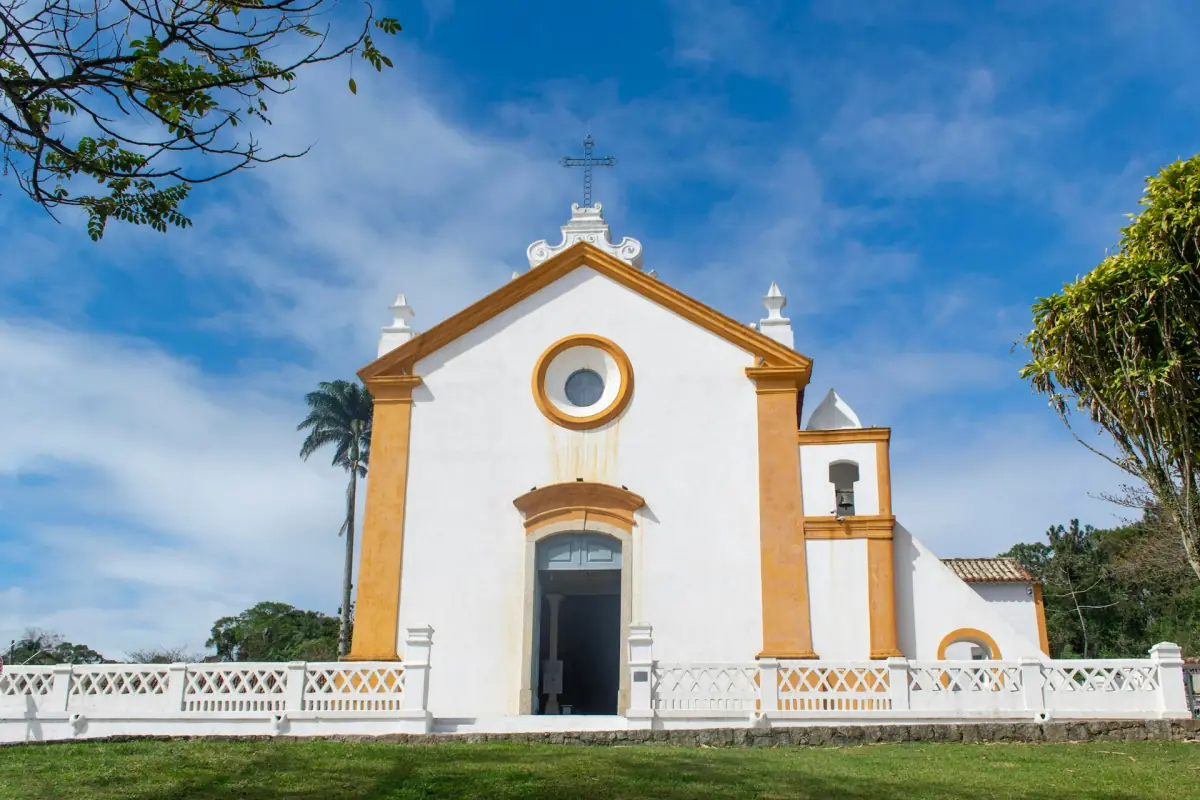
Florianópolis history in short
Florianópolis was not an empty island when the Europeans arrived. The city grew from a colonial settlement known as Nossa Senhora do Desterro, or simply Desterro. Portugal built a system of defensive forts from 1739, and between 1748 and 1756 an organised movement of settlers from the Azores came to the coast of Santa Catarina. In 1894 the city was renamed Florianópolis, after Floriano Peixoto.
Many of these layers are still visible on a visit. The fortresses sit on islands and points in the bay, the old village of Santo Antônio de Lisboa keeps its quiet bay, and the Ponte Hercílio Luz marks a more recent chapter. If you want to see them from the water, start with our Florianópolis boat trips.

Timeline
The dates that matter for a visit.
| Date | Event | What you can still see |
|---|---|---|
| 1739 | Defensive fortifications begin under the Portuguese crown | Three fortresses: Santa Cruz de Anhatomirim, Santo Antônio de Ratones, São José da Ponta Grossa |
| 1748–1756 | Organised arrival of settlers from the Azores | Historic places on the west side, such as Santo Antônio de Lisboa and Ribeirão da Ilha |
| 1894 | Desterro becomes Florianópolis | The city centre and Praça XV de Novembro |
| 1938 | National heritage protection for the fortresses | The fortresses, run today by the federal university |
| 13 May 1926 | Ponte Hercílio Luz inaugurated | The bridge, which marks its centenary in 2026 |
For most visitors with one free day, the fortress of Anhatomirim is the easiest way to touch this history, since it adds a boat ride to the bay.
Our pick: a walk through the historic centre
For the city's history, this 2.5-hour walk goes through the historic centre.
Hand-picked tours, booked through GetYourGuide. Prices are indicative starting prices in US dollars (as of October 2026). Tap a tour for live availability and the current price in your currency.

Florianópolis tours that touch the history
Boat trips to the bay, city outings and day trips, with live prices and availability.
From Desterro to Florianópolis
The name and the city.
Desterro
The old name was Nossa Senhora do Desterro, often shortened to Desterro. The city kept it until 1894, when it took the name Florianópolis, linked to Floriano Peixoto.
The people before and after
The island had people before the Europeans, and the protected landscape of Campeche Island carries archaeology as well as nature. Federal heritage protection (IPHAN) has applied to the island since 2000, and since 2025 it is also a municipal natural monument. The island already had inhabitants before the Portuguese.
Campeche Island →The Azorean settlers
The organised settlement ran from 1748 to 1756. Plan the historic places on the west side of the island, Santo Antônio de Lisboa and Ribeirão da Ilha, as a trip of their own, apart from the centre.
The fortress system
Three managed fortresses today.
The defensive system started in 1739 under the Portuguese crown, and the fortresses have had national heritage protection since 1938. The federal university (UFSC) manages three sites: Santa Cruz de Anhatomirim, Santo Antônio de Ratones and São José da Ponta Grossa.
Anhatomirim and Ratones can only be reached by boat, and the crossing is not part of the entry fee. São José da Ponta Grossa lies near Praia do Forte and can be reached by land. Since 24 June 2026 full entry is R$ 20 and reduced entry R$ 10, with a double ticket for Anhatomirim and Ratones at R$ 30 and R$ 15. Opening hours are Tuesday to Sunday, 8:30 a.m. to 6:30 p.m., with entry until 6 p.m. Children up to 5 years and visitors from 60 years enter free.
A walk through the centre covers the later layers: Praça XV de Novembro with its fig tree, the market and the bridge. Santo Antônio de Lisboa and Ribeirão da Ilha belong to the west side of the island and are not stops on a short centre walk, so give them their own half day. Check the opening times of single churches and market stalls for the day you go.
Some bay cruises leave from the Trapiche de Canasvieiras in the north. The Canasvieiras page has the practical details.
A more recent anchor: the Hercílio Luz Bridge
One hundred years in 2026.
The Ponte Hercílio Luz was inaugurated on 13 May 1926, so 2026 is its centenary. On weekends vehicles have been kept off the bridge to allow repairs, and this does not close the footpaths. Check the rules for pedestrians and cyclists on the day. For the bridge, Praça XV with its fig tree and the market, see the downtown page.
See the history in person
Pages that connect to the story.


Florianópolis history: frequently asked questions
What was Florianópolis called before?
Nossa Senhora do Desterro, usually Desterro. The city took the name Florianópolis in 1894, after Floriano Peixoto.
When did the Azorean settlers arrive?
An organised settlement from the Azores took place between 1748 and 1756.
How old are the fortresses?
The defensive system started in 1739 under the Portuguese crown. The fortresses have had national heritage protection since 1938.
Can I visit all three fortresses?
Yes, but with different access. Anhatomirim and Ratones need a boat, and São José da Ponta Grossa can be reached by land near Praia do Forte. Entry is R$ 20, or R$ 10 reduced, since 24 June 2026.
When was the Hercílio Luz Bridge inaugurated?
On 13 May 1926. Its hundredth anniversary is in 2026.